Clinical Study
What Do Recent Positivity Rates Tell Us About Rotavirus Activity?

Beth A. McNally, Ph.D. • Published: May 28, 2026 • Last Reviewed: May, 2026
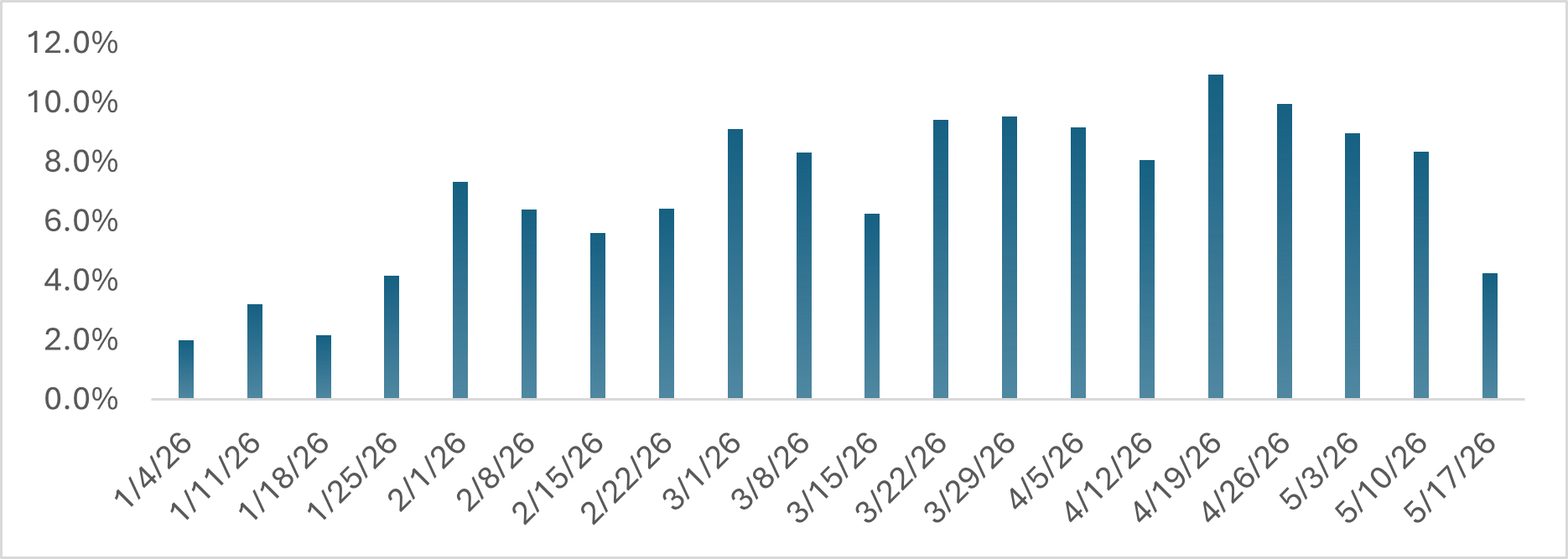
Rotavirus remains one of the leading causes of acute gastroenteritis worldwide, especially in infants and young children, and can also affect older adults and immuno-compromised patients. [1,2] Recent HealthTrack surveillance data shows that Rotavirus A positivity rates fluctuated between 2.0% and 10.9% from January through mid-May 2026, highlighting ongoing community transmission and seasonal variation.
What Is Rotavirus?

Rotavirus. Transmission electron microscopic image of rotavirus showing its classic “wheel-shaped” morphology. (Contributed by E Palmer, MD 1978, CDC Public Health Image Library. ID 15194).
Rotavirus, named for its “wheel-shaped” appearance, is a highly contagious double-stranded RNA virus belonging to the family Reoviridae and remains one of the leading causes of severe pediatric gastroenteritis worldwide.[1,3] Of the currently recognized rotavirus species (Rotavirus A–J), Rotavirus A is the predominant cause of human childhood infection, while Rotavirus B and C have also been associated with human disease.[4]
Rotavirus primarily spreads through the fecal–oral route but may also be transmitted through contaminated hands, surfaces, food, and water.[1,3] Infection leads to inflammation of the stomach and intestines, resulting in acute gastroenteritis. Although adults may become infected, children younger than 5 years old are at greatest risk, particularly infants between 3 and 35 months of age.[1,5] Symptoms typically begin within approximately 48 hours of exposure and may last 3–8 days.[1] Severe dehydration remains the major cause of hospitalization associated with rotavirus infection.[1,5]
What Are the Common Symptoms of Rotavirus?
Common Symptoms of Rotavirus Include:
- Severe watery diarrhea
- Vomiting
- Fever
- Abdominal pain
- Dehydration
Table 1. Common Clinical Features of Rotavirus Infection
| Clinical Feature | Typical Findings |
|---|---|
| Incubation period | Approximately 2 days[1] |
| Duration of illness | 3–8 days[1] |
| Main complication | Dehydration[1] |
| Transmission route | Fecal–oral[1,3] |
| High-risk group | Infants and young children[1] |
What Do the 2026 Positivity Rates Tell Us About Rotavirus Activity?
Rotavirus infections in the United States historically demonstrate seasonal increases during cooler months and seasonal transition periods, particularly in winter and spring.[1,6] Weekly Rotavirus A surveillance data collected at HealthTrack in 2026 (Table 2) showed a clear upward trend beginning in early February, with positivity rates peaking at 10.9% during the week of 4/19/26. Elevated positivity persisted throughout March and April before declining in mid-May, consistent with established U.S. rotavirus seasonal patterns reported by the CDC and national surveillance studies.[1,6]
Table 2. Weekly 2026 Rotavirus A Positivity Rates
Higher positivity rates generally correlate with:
- Increased pediatric emergency visits[7]
- Higher dehydration-related admissions[7,8]
- Greater transmission in daycare and school settings[1]
- Increased burden on outpatient and urgent care practices[7]
How Can Overnight Molecular Testing Help?
Rotavirus infection can be difficult to distinguish clinically from gastroenteritis caused by other viral, bacterial, and parasitic pathogens.[9] Noninfectious causes of acute abdominal symptoms—including appendicitis, diverticulitis, inflammatory bowel disease, and irritable bowel syndrome—should also be considered in the differential diagnosis.[9]
Among infectious causes of acute gastroenteritis, viruses are responsible for a substantial proportion of cases worldwide.[9,10] Viral pathogens with clinical presentations similar to rotavirus infection include norovirus, adenovirus, and astrovirus.[9]
Bacterial pathogens capable of producing similar gastrointestinal symptoms include:
- Campylobacter spp.
- Clostridioides difficile
- Escherichia coli
- Listeria monocytogenes
- Salmonella spp.
- Shigella spp.
- Vibrio spp.
- Yersinia enterocolitica[9,10,14]
Parasitic pathogens that may resemble acute viral gastroenteritis include:
- Cryptosporidium spp.
- Cyclospora cayetanensis
- Giardia duodenalis
- Cystoisospora belli[9,14]
Molecular diagnostic testing has improved the detection of infectious diarrhea by rapidly identifying rotavirus and other gastrointestinal pathogens with high sensitivity and specificity.[11,12] Rapid molecular diagnostics are particularly valuable during periods of elevated positivity because distinguishing viral from bacterial causes of diarrhea can directly affect patient management and antimicrobial stewardship.[11,12]
Overnight testing offers several potential advantages for providers and patients:
- Faster differentiation between viral and bacterial gastroenteritis
- Earlier clinical decision-making and infection control
- More targeted treatment plans
- Reduced unnecessary antibiotic prescribing[12]
- Improved workflow efficiency
- Faster reassurance for patients and caregivers
What Should Providers Watch for Clinically?
Diagnostic testing for infectious gastroenteritis may be particularly warranted in:
- Pregnant patients with severe symptoms
- Adults older than 65 years
- Immunocompromised patients
- Patients presenting with severe dehydration, hypovolemia, fever, or significant abdominal pain[9,13]
Infectious disease providers should consider rotavirus in:
- Infants and toddlers with acute watery diarrhea
- Daycare or healthcare-associated outbreaks
- Children with significant vomiting and dehydration
- Seasonal gastroenteritis surges during winter and spring months[1,6]
Why Does Rotavirus Matter?
Rotavirus remains a clinically important cause of pediatric gastroenteritis even in the vaccine era.[1,5] Although vaccination has substantially reduced severe disease, hospitalizations, and mortality, seasonal transmission continues to occur.[1,5]
The 2026 HealthTrack surveillance data show sustained seasonal activity with positivity rates exceeding 10% during peak weeks, reinforcing the continued need for vigilance among infectious disease providers. These trends reinforce the importance of continued surveillance, rapid diagnostics, and timely clinical intervention.
For providers, overnight molecular testing can improve workflow efficiency and support evidence-based treatment decisions while reducing unnecessary antibiotic exposure.[11,12] For patients and caregivers, faster diagnostic answers may contribute to more timely symptom management and avoidance of unnecessary therapies.
References
- Centers for Disease Control and Prevention – Rotavirus Clinical Overview https://www.cdc.gov/rotavirus/hcp/clinical-overview/index.html
- Tate JE, Burton AH, Boschi-Pinto C, et al. Global, Regional, and National Estimates of Rotavirus Mortality in Children <5 Years of Age, 2000–2013. Clinical Infectious Diseases. 2016;62(Suppl 2):S96–S105.
- Crawford SE, Ramani S, Tate JE, et al. Rotavirus infection. Nature Reviews Disease Primers. 2017;3:17083.
- Matthijnssens J, Otto PH, Ciarlet M, et al. VP6-sequence-based cutoff values as a criterion for rotavirus species demarcation. Archives of Virology. 2012;157(6):1177–1182.
- Parashar UD, Hummelman EG, Bresee JS, et al. Global Illness and Deaths Caused by Rotavirus Disease in Children. Emerging Infectious Diseases. 2003;9(5):565–572.
- Aliabadi N, Tate JE, Haynes AK, et al. Sustained Decrease in Laboratory Detection of Rotavirus after Implementation of Routine Vaccination — United States, 2000–2014. MMWR. 2015;64(13):337–342.
- Payne DC, Staat MA, Edwards KM, et al. Direct and Indirect Effects of Rotavirus Vaccination Upon Childhood Hospitalization in 3 US Counties, 2006–2009. Clinical Infectious Diseases. 2011;53(3):245–253.
- Cortese MM, Tate JE, Simonsen L, et al. Reduction in Gastroenteritis in United States Children and Correlation With Early Rotavirus Vaccine Uptake From National Medical Claims Databases. Pediatric Infectious Disease Journal. 2010;29(6):489–494.
- Shane AL, Mody RK, Crump JA, et al. 2017 Infectious Diseases Society of America Clinical Practice Guidelines for the Diagnosis and Management of Infectious Diarrhea. Clinical Infectious Diseases. 2017;65(12):e45–e80.
- Troeger C, Blacker BF, Khalil IA, et al. Estimates of the Global, Regional, and National Morbidity, Mortality, and Etiologies of Diarrhoea in 195 Countries. The Lancet Infectious Diseases. 2018;18(11):1211–1228.
- Buss SN, Leber A, Chapin K, et al. Multicenter Evaluation of the BioFire FilmArray Gastrointestinal Panel for Etiologic Diagnosis of Infectious Gastroenteritis. Journal of Clinical Microbiology. 2015;53(3):915–925.
- Beal SG, Tremblay EE, Toffel S, et al. A Gastrointestinal PCR Panel Improves Clinical Management and Lowers Health Care Costs. Journal of Clinical Microbiology. 2018;56(1):e01457-17.
- Riddle MS, DuPont HL, Connor BA. ACG Clinical Guideline: Diagnosis, Treatment, and Prevention of Acute Diarrheal Infections in Adults. American Journal of Gastroenterology. 2016;111(5):602–622.
- LeClair CE, McConnell KA. Rotavirus. [Updated 2023 Jan 2]. In: StatPearls [Internet]. Treasure Island (FL): StatPearls Publishing; 2026 Jan-. Available from:
https://www.ncbi.nlm.nih.gov/books/NBK558951/
References
- Centers for Disease Control and Prevention – Rotavirus Clinical Overview https://www.cdc.gov/rotavirus/hcp/clinical-overview/index.html
- Tate JE, Burton AH, Boschi-Pinto C, et al. Global, Regional, and National Estimates of Rotavirus Mortality in Children <5 Years of Age, 2000–2013. Clinical Infectious Diseases. 2016;62(Suppl 2):S96–S105.
- Crawford SE, Ramani S, Tate JE, et al. Rotavirus infection. Nature Reviews Disease Primers. 2017;3:17083.
- Matthijnssens J, Otto PH, Ciarlet M, et al. VP6-sequence-based cutoff values as a criterion for rotavirus species demarcation. Archives of Virology. 2012;157(6):1177–1182.
- Parashar UD, Hummelman EG, Bresee JS, et al. Global Illness and Deaths Caused by Rotavirus Disease in Children. Emerging Infectious Diseases. 2003;9(5):565–572.
- Aliabadi N, Tate JE, Haynes AK, et al. Sustained Decrease in Laboratory Detection of Rotavirus after Implementation of Routine Vaccination — United States, 2000–2014. MMWR. 2015;64(13):337–342.
- Payne DC, Staat MA, Edwards KM, et al. Direct and Indirect Effects of Rotavirus Vaccination Upon Childhood Hospitalization in 3 US Counties, 2006–2009. Clinical Infectious Diseases. 2011;53(3):245–253.
- Cortese MM, Tate JE, Simonsen L, et al. Reduction in Gastroenteritis in United States Children and Correlation With Early Rotavirus Vaccine Uptake From National Medical Claims Databases. Pediatric Infectious Disease Journal. 2010;29(6):489–494.
- Shane AL, Mody RK, Crump JA, et al. 2017 Infectious Diseases Society of America Clinical Practice Guidelines for the Diagnosis and Management of Infectious Diarrhea. Clinical Infectious Diseases. 2017;65(12):e45–e80.
- Troeger C, Blacker BF, Khalil IA, et al. Estimates of the Global, Regional, and National Morbidity, Mortality, and Etiologies of Diarrhoea in 195 Countries. The Lancet Infectious Diseases. 2018;18(11):1211–1228.
- Buss SN, Leber A, Chapin K, et al. Multicenter Evaluation of the BioFire FilmArray Gastrointestinal Panel for Etiologic Diagnosis of Infectious Gastroenteritis. Journal of Clinical Microbiology. 2015;53(3):915–925.
- Beal SG, Tremblay EE, Toffel S, et al. A Gastrointestinal PCR Panel Improves Clinical Management and Lowers Health Care Costs. Journal of Clinical Microbiology. 2018;56(1):e01457-17.
- Riddle MS, DuPont HL, Connor BA. ACG Clinical Guideline: Diagnosis, Treatment, and Prevention of Acute Diarrheal Infections in Adults. American Journal of Gastroenterology. 2016;111(5):602–622.
- LeClair CE, McConnell KA. Rotavirus. [Updated 2023 Jan 2]. In: StatPearls [Internet]. Treasure Island (FL): StatPearls Publishing; 2026 Jan-. Available from:
https://www.ncbi.nlm.nih.gov/books/NBK558951/

Medical Science Liaison
Related Articles and White papers



Beth A. McNally, Ph.D. • Published: May 28, 2026 • Last Reviewed: May, 2026
Rotavirus remains one of the leading causes of acute gastroenteritis worldwide, especially in infants and young children, and can also affect older adults and immuno-compromised patients. [1,2] Recent HealthTrack surveillance data shows that Rotavirus A positivity rates fluctuated between 2.0% and 10.9% from January through mid-May 2026, highlighting ongoing community transmission and seasonal variation.
What Is Rotavirus?
Rotavirus. Transmission electron microscopic image of rotavirus showing its classic “wheel-shaped” morphology. (Contributed by E Palmer, MD 1978, CDC Public Health Image Library. ID 15194).
Rotavirus, named for its “wheel-shaped” appearance, is a highly contagious double-stranded RNA virus belonging to the family Reoviridae and remains one of the leading causes of severe pediatric gastroenteritis worldwide.[1,3] Of the currently recognized rotavirus species (Rotavirus A–J), Rotavirus A is the predominant cause of human childhood infection, while Rotavirus B and C have also been associated with human disease.[4]
Rotavirus primarily spreads through the fecal–oral route but may also be transmitted through contaminated hands, surfaces, food, and water.[1,3] Infection leads to inflammation of the stomach and intestines, resulting in acute gastroenteritis. Although adults may become infected, children younger than 5 years old are at greatest risk, particularly infants between 3 and 35 months of age.[1,5] Symptoms typically begin within approximately 48 hours of exposure and may last 3–8 days.[1] Severe dehydration remains the major cause of hospitalization associated with rotavirus infection.[1,5]
What Are the Common Symptoms of Rotavirus?
Common Symptoms of Rotavirus Include:
- Severe watery diarrhea
- Vomiting
- Fever
- Abdominal pain
- Dehydration
Table 1. Common Clinical Features of Rotavirus Infection
| Clinical Feature | Typical Findings |
|---|---|
| Incubation period | Approximately 2 days[1] |
| Duration of illness | 3–8 days[1] |
| Main complication | Dehydration[1] |
| Transmission route | Fecal–oral[1,3] |
| High-risk group | Infants and young children[1] |
What Do the 2026 Positivity Rates Tell Us About Rotavirus Activity?
Rotavirus infections in the United States historically demonstrate seasonal increases during cooler months and seasonal transition periods, particularly in winter and spring.[1,6] Weekly Rotavirus A surveillance data collected at HealthTrack in 2026 (Table 2) showed a clear upward trend beginning in early February, with positivity rates peaking at 10.9% during the week of 4/19/26. Elevated positivity persisted throughout March and April before declining in mid-May, consistent with established U.S. rotavirus seasonal patterns reported by the CDC and national surveillance studies.[1,6]
Table 2. Weekly 2026 Rotavirus A Positivity Rates
Higher positivity rates generally correlate with:
- Increased pediatric emergency visits[7]
- Higher dehydration-related admissions[7,8]
- Greater transmission in daycare and school settings[1]
- Increased burden on outpatient and urgent care practices[7]
How Can Overnight Molecular Testing Help?
Rotavirus infection can be difficult to distinguish clinically from gastroenteritis caused by other viral, bacterial, and parasitic pathogens.[9] Noninfectious causes of acute abdominal symptoms—including appendicitis, diverticulitis, inflammatory bowel disease, and irritable bowel syndrome—should also be considered in the differential diagnosis.[9]
Among infectious causes of acute gastroenteritis, viruses are responsible for a substantial proportion of cases worldwide.[9,10] Viral pathogens with clinical presentations similar to rotavirus infection include norovirus, adenovirus, and astrovirus.[9]
Bacterial pathogens capable of producing similar gastrointestinal symptoms include:
- Campylobacter spp.
- Clostridioides difficile
- Escherichia coli
- Listeria monocytogenes
- Salmonella spp.
- Shigella spp.
- Vibrio spp.
- Yersinia enterocolitica[9,10,14]
Parasitic pathogens that may resemble acute viral gastroenteritis include:
- Cryptosporidium spp.
- Cyclospora cayetanensis
- Giardia duodenalis
- Cystoisospora belli[9,14]
Molecular diagnostic testing has improved the detection of infectious diarrhea by rapidly identifying rotavirus and other gastrointestinal pathogens with high sensitivity and specificity.[11,12] Rapid molecular diagnostics are particularly valuable during periods of elevated positivity because distinguishing viral from bacterial causes of diarrhea can directly affect patient management and antimicrobial stewardship.[11,12]
Overnight testing offers several potential advantages for providers and patients:
- Faster differentiation between viral and bacterial gastroenteritis
- Earlier clinical decision-making and infection control
- More targeted treatment plans
- Reduced unnecessary antibiotic prescribing[12]
- Improved workflow efficiency
- Faster reassurance for patients and caregivers
What Should Providers Watch for Clinically?
Diagnostic testing for infectious gastroenteritis may be particularly warranted in:
- Pregnant patients with severe symptoms
- Adults older than 65 years
- Immunocompromised patients
- Patients presenting with severe dehydration, hypovolemia, fever, or significant abdominal pain[9,13]
Infectious disease providers should consider rotavirus in:
- Infants and toddlers with acute watery diarrhea
- Daycare or healthcare-associated outbreaks
- Children with significant vomiting and dehydration
- Seasonal gastroenteritis surges during winter and spring months[1,6]
Why Does Rotavirus Matter?
Rotavirus remains a clinically important cause of pediatric gastroenteritis even in the vaccine era.[1,5] Although vaccination has substantially reduced severe disease, hospitalizations, and mortality, seasonal transmission continues to occur.[1,5]
The 2026 HealthTrack surveillance data show sustained seasonal activity with positivity rates exceeding 10% during peak weeks, reinforcing the continued need for vigilance among infectious disease providers. These trends reinforce the importance of continued surveillance, rapid diagnostics, and timely clinical intervention.
For providers, overnight molecular testing can improve workflow efficiency and support evidence-based treatment decisions while reducing unnecessary antibiotic exposure.[11,12] For patients and caregivers, faster diagnostic answers may contribute to more timely symptom management and avoidance of unnecessary therapies.
References
- Centers for Disease Control and Prevention – Rotavirus Clinical Overview https://www.cdc.gov/rotavirus/hcp/clinical-overview/index.html
- Tate JE, Burton AH, Boschi-Pinto C, et al. Global, Regional, and National Estimates of Rotavirus Mortality in Children <5 Years of Age, 2000–2013. Clinical Infectious Diseases. 2016;62(Suppl 2):S96–S105.
- Crawford SE, Ramani S, Tate JE, et al. Rotavirus infection. Nature Reviews Disease Primers. 2017;3:17083.
- Matthijnssens J, Otto PH, Ciarlet M, et al. VP6-sequence-based cutoff values as a criterion for rotavirus species demarcation. Archives of Virology. 2012;157(6):1177–1182.
- Parashar UD, Hummelman EG, Bresee JS, et al. Global Illness and Deaths Caused by Rotavirus Disease in Children. Emerging Infectious Diseases. 2003;9(5):565–572.
- Aliabadi N, Tate JE, Haynes AK, et al. Sustained Decrease in Laboratory Detection of Rotavirus after Implementation of Routine Vaccination — United States, 2000–2014. MMWR. 2015;64(13):337–342.
- Payne DC, Staat MA, Edwards KM, et al. Direct and Indirect Effects of Rotavirus Vaccination Upon Childhood Hospitalization in 3 US Counties, 2006–2009. Clinical Infectious Diseases. 2011;53(3):245–253.
- Cortese MM, Tate JE, Simonsen L, et al. Reduction in Gastroenteritis in United States Children and Correlation With Early Rotavirus Vaccine Uptake From National Medical Claims Databases. Pediatric Infectious Disease Journal. 2010;29(6):489–494.
- Shane AL, Mody RK, Crump JA, et al. 2017 Infectious Diseases Society of America Clinical Practice Guidelines for the Diagnosis and Management of Infectious Diarrhea. Clinical Infectious Diseases. 2017;65(12):e45–e80.
- Troeger C, Blacker BF, Khalil IA, et al. Estimates of the Global, Regional, and National Morbidity, Mortality, and Etiologies of Diarrhoea in 195 Countries. The Lancet Infectious Diseases. 2018;18(11):1211–1228.
- Buss SN, Leber A, Chapin K, et al. Multicenter Evaluation of the BioFire FilmArray Gastrointestinal Panel for Etiologic Diagnosis of Infectious Gastroenteritis. Journal of Clinical Microbiology. 2015;53(3):915–925.
- Beal SG, Tremblay EE, Toffel S, et al. A Gastrointestinal PCR Panel Improves Clinical Management and Lowers Health Care Costs. Journal of Clinical Microbiology. 2018;56(1):e01457-17.
- Riddle MS, DuPont HL, Connor BA. ACG Clinical Guideline: Diagnosis, Treatment, and Prevention of Acute Diarrheal Infections in Adults. American Journal of Gastroenterology. 2016;111(5):602–622.
- LeClair CE, McConnell KA. Rotavirus. [Updated 2023 Jan 2]. In: StatPearls [Internet]. Treasure Island (FL): StatPearls Publishing; 2026 Jan-. Available from:
https://www.ncbi.nlm.nih.gov/books/NBK558951/
References
- Centers for Disease Control and Prevention – Rotavirus Clinical Overview https://www.cdc.gov/rotavirus/hcp/clinical-overview/index.html
- Tate JE, Burton AH, Boschi-Pinto C, et al. Global, Regional, and National Estimates of Rotavirus Mortality in Children <5 Years of Age, 2000–2013. Clinical Infectious Diseases. 2016;62(Suppl 2):S96–S105.
- Crawford SE, Ramani S, Tate JE, et al. Rotavirus infection. Nature Reviews Disease Primers. 2017;3:17083.
- Matthijnssens J, Otto PH, Ciarlet M, et al. VP6-sequence-based cutoff values as a criterion for rotavirus species demarcation. Archives of Virology. 2012;157(6):1177–1182.
- Parashar UD, Hummelman EG, Bresee JS, et al. Global Illness and Deaths Caused by Rotavirus Disease in Children. Emerging Infectious Diseases. 2003;9(5):565–572.
- Aliabadi N, Tate JE, Haynes AK, et al. Sustained Decrease in Laboratory Detection of Rotavirus after Implementation of Routine Vaccination — United States, 2000–2014. MMWR. 2015;64(13):337–342.
- Payne DC, Staat MA, Edwards KM, et al. Direct and Indirect Effects of Rotavirus Vaccination Upon Childhood Hospitalization in 3 US Counties, 2006–2009. Clinical Infectious Diseases. 2011;53(3):245–253.
- Cortese MM, Tate JE, Simonsen L, et al. Reduction in Gastroenteritis in United States Children and Correlation With Early Rotavirus Vaccine Uptake From National Medical Claims Databases. Pediatric Infectious Disease Journal. 2010;29(6):489–494.
- Shane AL, Mody RK, Crump JA, et al. 2017 Infectious Diseases Society of America Clinical Practice Guidelines for the Diagnosis and Management of Infectious Diarrhea. Clinical Infectious Diseases. 2017;65(12):e45–e80.
- Troeger C, Blacker BF, Khalil IA, et al. Estimates of the Global, Regional, and National Morbidity, Mortality, and Etiologies of Diarrhoea in 195 Countries. The Lancet Infectious Diseases. 2018;18(11):1211–1228.
- Buss SN, Leber A, Chapin K, et al. Multicenter Evaluation of the BioFire FilmArray Gastrointestinal Panel for Etiologic Diagnosis of Infectious Gastroenteritis. Journal of Clinical Microbiology. 2015;53(3):915–925.
- Beal SG, Tremblay EE, Toffel S, et al. A Gastrointestinal PCR Panel Improves Clinical Management and Lowers Health Care Costs. Journal of Clinical Microbiology. 2018;56(1):e01457-17.
- Riddle MS, DuPont HL, Connor BA. ACG Clinical Guideline: Diagnosis, Treatment, and Prevention of Acute Diarrheal Infections in Adults. American Journal of Gastroenterology. 2016;111(5):602–622.
- LeClair CE, McConnell KA. Rotavirus. [Updated 2023 Jan 2]. In: StatPearls [Internet]. Treasure Island (FL): StatPearls Publishing; 2026 Jan-. Available from:
https://www.ncbi.nlm.nih.gov/books/NBK558951/
Medical Science Liaison