Clinical Study
Respiratory Season Care Seeking Insights: Survey Data on Testing, Antibiotic Use, and Where Patients Go First

HealthTrackRx • December 16, 2025
Respiratory season continues to affect nearly everyone, and a new survey of 1,005 Americans shows how people are handling symptoms, deciding when to seek care, and navigating common misconceptions. Most adults have experienced respiratory symptoms in the past year, and many continue daily routines while sick or delay care because of cost. The findings also highlight ongoing confusion around antibiotics and how often they are prescribed without testing. Together, the data offers a clearer look at how Americans make decisions during respiratory season and what may be shaping their experiences with care.
Key Takeaways
- 88% of Americans have experienced respiratory symptoms in the past year.
- 64% of Americans say they have gone to work or school while experiencing symptoms this year.
- 44% of Americans have been prescribed antibiotics two or more times in the past five years.
- 47% of Americans who have ever been prescribed antibiotics say their most recent prescription was given without testing.
How Americans React When Respiratory Symptoms Begin
Most Americans have dealt with respiratory symptoms this year, and the way they respond reveals a mix of self-management, digital searching, and delayed care. The survey highlights how people decide what to do when coughing, congestion, or sore throats first appear—and what ultimately keeps them from seeking medical attention.

Nearly nine in ten Americans have experienced respiratory symptoms in the past year, with many facing them several times. When symptoms begin, most people start with at-home strategies: 31% rest and monitor symptoms, 26% take over-the-counter medicine, and 19% turn to online searches for guidance. Gen Z is especially likely to look things up, with 33% saying their first response is to search online when symptoms appear. Confidence in professional care is strong, with 90% of Americans feeling confident that a healthcare provider gives an accurate diagnosis for respiratory symptoms, although 1 in 10 are not confident. Cost is still one of the most influential barriers, with 47% saying the price of medical care has kept them from seeking help, and many also pointing to limited appointments, lack of insurance coverage, and long wait times as reasons for delaying care.
How Parents Decide Whether Sick Kids Stay Home or Go to School
Parents often face tough calls during respiratory season, balancing symptoms, school demands, and gaps in childcare. This section explores how parents evaluate illness severity and why many still send kids to school despite respiratory symptoms.
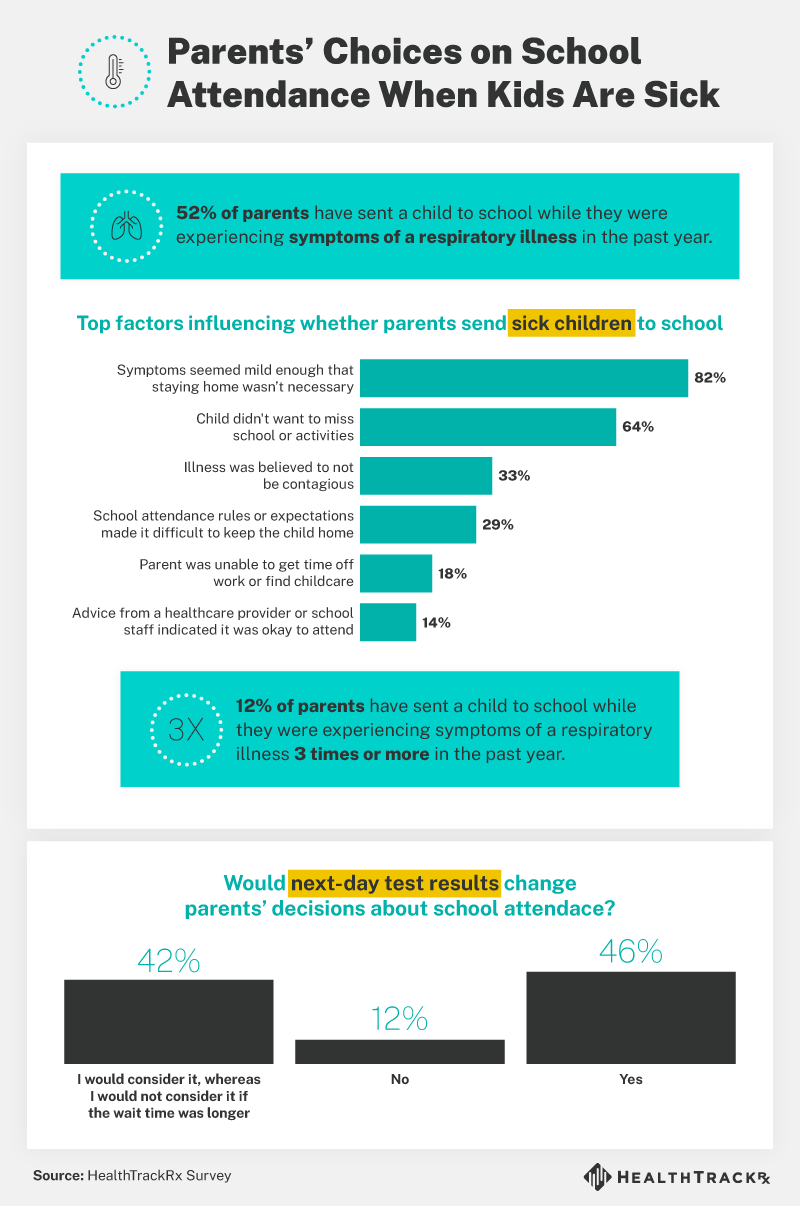
More than half of parents have sent a child to school while they were symptomatic in the past year. Most say the symptoms seemed mild or their child appeared well enough to attend, while others feared their child would fall behind academically or miss important activities. Some believed the illness was not contagious, and a smaller share cited lack of childcare or inflexible work schedules. A notable group of parents report doing this frequently, with 12 percent sending a sick child to school three or more times in the past year. These findings highlight the everyday pressures families face during respiratory season and the difficult decisions they make when illness intersects with school and work demands.
How Americans Seek Care—and the Barriers They Face
Where Americans go for medical care and how easily they can access it varies widely. Let’s examine provider-seeking behavior, travel time, and the role of overall health and nutrition in managing respiratory illness.

When sick, a majority of Americans visit a primary care provider first, while 20% rely on urgent care and 5% turn to telehealth. Fourteen percent say they do not see a healthcare provider at all when they’re ill. Access remains a challenge, especially for rural residents—20% of Americans in rural communities report traveling more than 30 minutes one way for care. Many also recognize the role of long-term health in respiratory outcomes: 74% believe that diet and overall health affect how often a person gets sick, yet 22% say it’s difficult to find affordable, healthy food in their area.
Americans’ Antibiotic Beliefs and Testing Preferences
Antibiotic use is widespread, but misconceptions about when these medications are appropriate remain common. Let’s explore testing habits, prescribing patterns, and how Americans view the timing of diagnostic results.

Antibiotics remain a common treatment option for many Americans, with 94 percent reporting they have been prescribed them at some point, yet misunderstandings persist. Forty-one percent incorrectly believe antibiotics can treat viral infections, and prescribing patterns reflect ongoing gaps in diagnostic confirmation. Many prescriptions are written without testing, and expectations for turnaround times vary. Some Americans also report that treatment has not always been effective, with 31 percent saying their symptoms did not fully go away the last time they took antibiotics. Even so, most people support a more cautious approach to prescribing. Ninety-five percent say they would choose a testing option that delivers accurate next-day results to help avoid unnecessary antibiotic use. These findings point to strong consumer support for diagnostics that improve stewardship and reduce overtreatment.
Understanding How Americans Navigate Respiratory Season
The findings from this survey show how frequently Americans encounter respiratory symptoms and how cost, access, and misconceptions shape their decisions about care. Many rely on self-management or continue daily activities while sick, and parents face unique pressures when navigating school attendance and childcare. Antibiotic use remains widespread, yet confusion about when these medications are appropriate persists, reinforcing the need for accurate testing and clear guidance. Together, these insights highlight the importance of affordable care, accessible diagnostics, and public health education as respiratory illnesses continue to circulate.
Methodology
HealthTrackRx conducted a survey of 1,005 adults in the United States to examine experiences and behaviors during respiratory season. Among respondents, 23 percent were baby boomers, 29 percent were members of Generation X, 30 percent were millennials, and 18 percent were members of Generation Z. The sample included equal proportions of men and women. Twenty-five percent identified as a parent or legal guardian of at least one child aged 3 to 17 residing in their household. Thirty-one percent lived in urban areas, 55 percent in suburban areas, and 14 percent in rural areas. Percentages may not sum to 100 due to rounding.
About HealthTrackRx
HealthTrackRx is a national leader in rapid molecular diagnostics, providing fast and accurate testing solutions that help clinicians deliver timely, informed, and responsible patient care.
Fair Use Statement
This content is available for sharing for non-commercial purposes only. If you wish to use these findings, please ensure to provide proper attribution by linking back to this page.
Related Articles and White papers


HealthTrackRx • December 16, 2025
Respiratory season continues to affect nearly everyone, and a new survey of 1,005 Americans shows how people are handling symptoms, deciding when to seek care, and navigating common misconceptions. Most adults have experienced respiratory symptoms in the past year, and many continue daily routines while sick or delay care because of cost. The findings also highlight ongoing confusion around antibiotics and how often they are prescribed without testing. Together, the data offers a clearer look at how Americans make decisions during respiratory season and what may be shaping their experiences with care.
Key Takeaways
- 88% of Americans have experienced respiratory symptoms in the past year.
- 64% of Americans say they have gone to work or school while experiencing symptoms this year.
- 44% of Americans have been prescribed antibiotics two or more times in the past five years.
- 47% of Americans who have ever been prescribed antibiotics say their most recent prescription was given without testing.
How Americans React When Respiratory Symptoms Begin
Most Americans have dealt with respiratory symptoms this year, and the way they respond reveals a mix of self-management, digital searching, and delayed care. The survey highlights how people decide what to do when coughing, congestion, or sore throats first appear—and what ultimately keeps them from seeking medical attention.
Nearly nine in ten Americans have experienced respiratory symptoms in the past year, with many facing them several times. When symptoms begin, most people start with at-home strategies: 31% rest and monitor symptoms, 26% take over-the-counter medicine, and 19% turn to online searches for guidance. Gen Z is especially likely to look things up, with 33% saying their first response is to search online when symptoms appear. Confidence in professional care is strong, with 90% of Americans feeling confident that a healthcare provider gives an accurate diagnosis for respiratory symptoms, although 1 in 10 are not confident. Cost is still one of the most influential barriers, with 47% saying the price of medical care has kept them from seeking help, and many also pointing to limited appointments, lack of insurance coverage, and long wait times as reasons for delaying care.
How Parents Decide Whether Sick Kids Stay Home or Go to School
Parents often face tough calls during respiratory season, balancing symptoms, school demands, and gaps in childcare. This section explores how parents evaluate illness severity and why many still send kids to school despite respiratory symptoms.
More than half of parents have sent a child to school while they were symptomatic in the past year. Most say the symptoms seemed mild or their child appeared well enough to attend, while others feared their child would fall behind academically or miss important activities. Some believed the illness was not contagious, and a smaller share cited lack of childcare or inflexible work schedules. A notable group of parents report doing this frequently, with 12 percent sending a sick child to school three or more times in the past year. These findings highlight the everyday pressures families face during respiratory season and the difficult decisions they make when illness intersects with school and work demands.
How Americans Seek Care—and the Barriers They Face
Where Americans go for medical care and how easily they can access it varies widely. Let’s examine provider-seeking behavior, travel time, and the role of overall health and nutrition in managing respiratory illness.
When sick, a majority of Americans visit a primary care provider first, while 20% rely on urgent care and 5% turn to telehealth. Fourteen percent say they do not see a healthcare provider at all when they’re ill. Access remains a challenge, especially for rural residents—20% of Americans in rural communities report traveling more than 30 minutes one way for care. Many also recognize the role of long-term health in respiratory outcomes: 74% believe that diet and overall health affect how often a person gets sick, yet 22% say it’s difficult to find affordable, healthy food in their area.
Americans’ Antibiotic Beliefs and Testing Preferences
Antibiotic use is widespread, but misconceptions about when these medications are appropriate remain common. Let’s explore testing habits, prescribing patterns, and how Americans view the timing of diagnostic results.
Antibiotics remain a common treatment option for many Americans, with 94 percent reporting they have been prescribed them at some point, yet misunderstandings persist. Forty-one percent incorrectly believe antibiotics can treat viral infections, and prescribing patterns reflect ongoing gaps in diagnostic confirmation. Many prescriptions are written without testing, and expectations for turnaround times vary. Some Americans also report that treatment has not always been effective, with 31 percent saying their symptoms did not fully go away the last time they took antibiotics. Even so, most people support a more cautious approach to prescribing. Ninety-five percent say they would choose a testing option that delivers accurate next-day results to help avoid unnecessary antibiotic use. These findings point to strong consumer support for diagnostics that improve stewardship and reduce overtreatment.
Understanding How Americans Navigate Respiratory Season
The findings from this survey show how frequently Americans encounter respiratory symptoms and how cost, access, and misconceptions shape their decisions about care. Many rely on self-management or continue daily activities while sick, and parents face unique pressures when navigating school attendance and childcare. Antibiotic use remains widespread, yet confusion about when these medications are appropriate persists, reinforcing the need for accurate testing and clear guidance. Together, these insights highlight the importance of affordable care, accessible diagnostics, and public health education as respiratory illnesses continue to circulate.
Methodology
HealthTrackRx conducted a survey of 1,005 adults in the United States to examine experiences and behaviors during respiratory season. Among respondents, 23 percent were baby boomers, 29 percent were members of Generation X, 30 percent were millennials, and 18 percent were members of Generation Z. The sample included equal proportions of men and women. Twenty-five percent identified as a parent or legal guardian of at least one child aged 3 to 17 residing in their household. Thirty-one percent lived in urban areas, 55 percent in suburban areas, and 14 percent in rural areas. Percentages may not sum to 100 due to rounding.
About HealthTrackRx
HealthTrackRx is a national leader in rapid molecular diagnostics, providing fast and accurate testing solutions that help clinicians deliver timely, informed, and responsible patient care.
Fair Use Statement
This content is available for sharing for non-commercial purposes only. If you wish to use these findings, please ensure to provide proper attribution by linking back to this page.