Clinical Study
Knowledge, Testing Behaviors, and Care Experiences Related to STIs and UTIs

HealthTrackRx • Published: April 13, 2026 • Last Reviewed: April, 2026
How Do Americans Recognize and Respond to STI and UTI Symptoms?
Sexually transmitted infections (STIs) and urinary tract infections (UTIs) are common health concerns, yet the way people recognize symptoms, seek care, and receive treatment can vary widely. To better understand these experiences, HealthTrack surveyed Americans about their knowledge of symptoms, testing behaviors, sources of sexual health information, and experiences with diagnosis and treatment.
Key Takeaways
- 1 in 10 Americans are unaware that STIs can occur without noticeable symptoms.
- 22% of Americans who have had an STI have avoided or delayed STI care due to concerns about privacy, judgment or embarrassment.
- 71% say faster, next-morning results would make them more likely to get tested for an STI.
- Patients treated for an STI or UTI without lab testing were 82% more likely to need a second healthcare visit due to symptoms not improving after treatment.
Misunderstandings About STI Symptoms Can Affect When People Seek Care
Recognizing symptoms is often the first step in deciding whether to seek STI testing. Misunderstandings about how STIs present can influence how people interpret symptoms and when they decide to pursue testing.
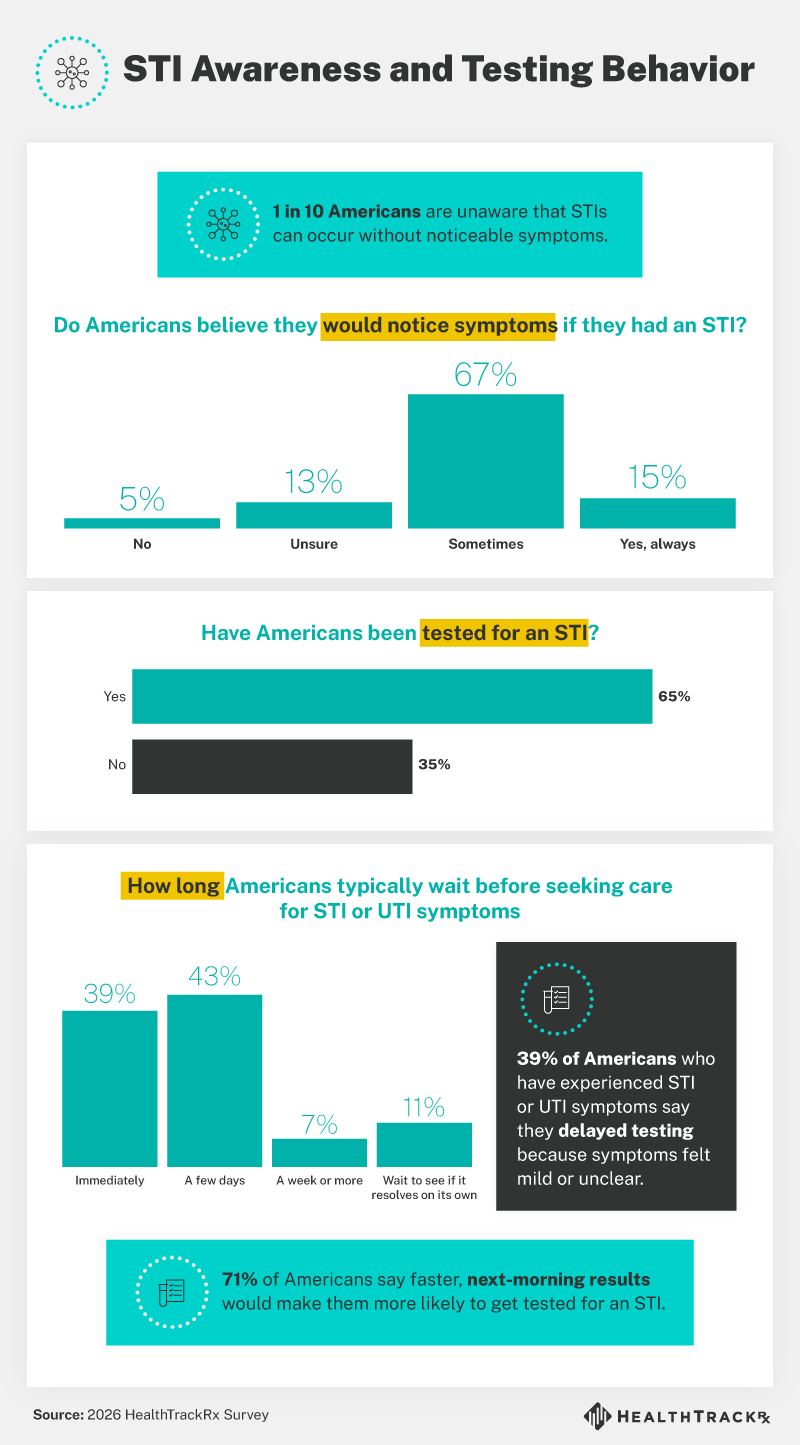
Delays in testing are relatively common when STI or UTI symptoms feel mild or unclear. Overall, 39% say they postponed testing for this reason, rising to 45% among Gen Z respondents. These patterns may reflect a combination of factors, including uncertainty about how STI symptoms present and hesitation to seek care for sensitive health concerns. Delays are also more common among those without health insurance, with 22% saying they wait to see if symptoms resolve on their own rather than seeking care.
Why Symptom Awareness and Early Testing Matter
“From both a clinical and population health perspective, one of the most important findings is that a meaningful portion of individuals don’t recognize that STIs can be asymptomatic. That gap in awareness—combined with hesitation around privacy and stigma—creates a delay in testing that allows infections to persist, spread, and ultimately require more complex care. Early, informed decision-making is critical to both individual outcomes and broader public health.” — Dr. Steven Goldberg, MD, MBA, Chief Medical Officer, HealthTrack
How People Seek Information and Care for Sexual Health Concerns
When sexual health concerns arise, people may turn to a range of sources for information and care. The survey explored where individuals first look for guidance, how comfortable they feel discussing sexual health with providers, and what factors influence where they choose to get tested.
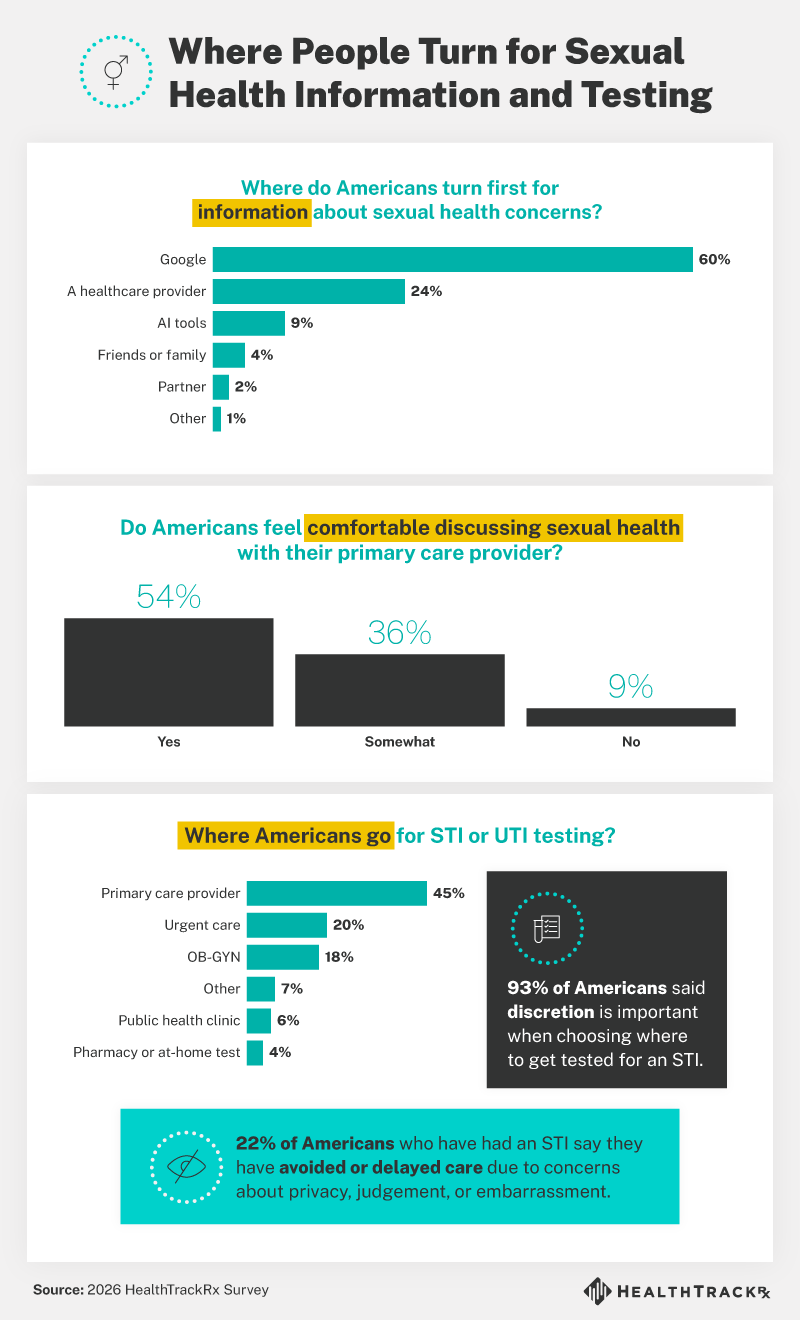
Where people seek care for sexual health concerns can vary depending on comfort and access to different providers. For example, 33% of women say they go to their OB-GYN for STI or UTI testing. Privacy concerns can also influence whether people pursue care. Among Gen Z respondents who have had an STI, 30% say they avoided or delayed care due to concerns about privacy, judgment, or embarrassment.
Information Sources and Comfort With Care Can Shape Testing Decisions
When sexual health concerns arise, people may turn to a variety of sources for information and guidance. The survey explored where individuals first look for answers, how comfortable they feel discussing sexual health with providers, and where they choose to seek testing.
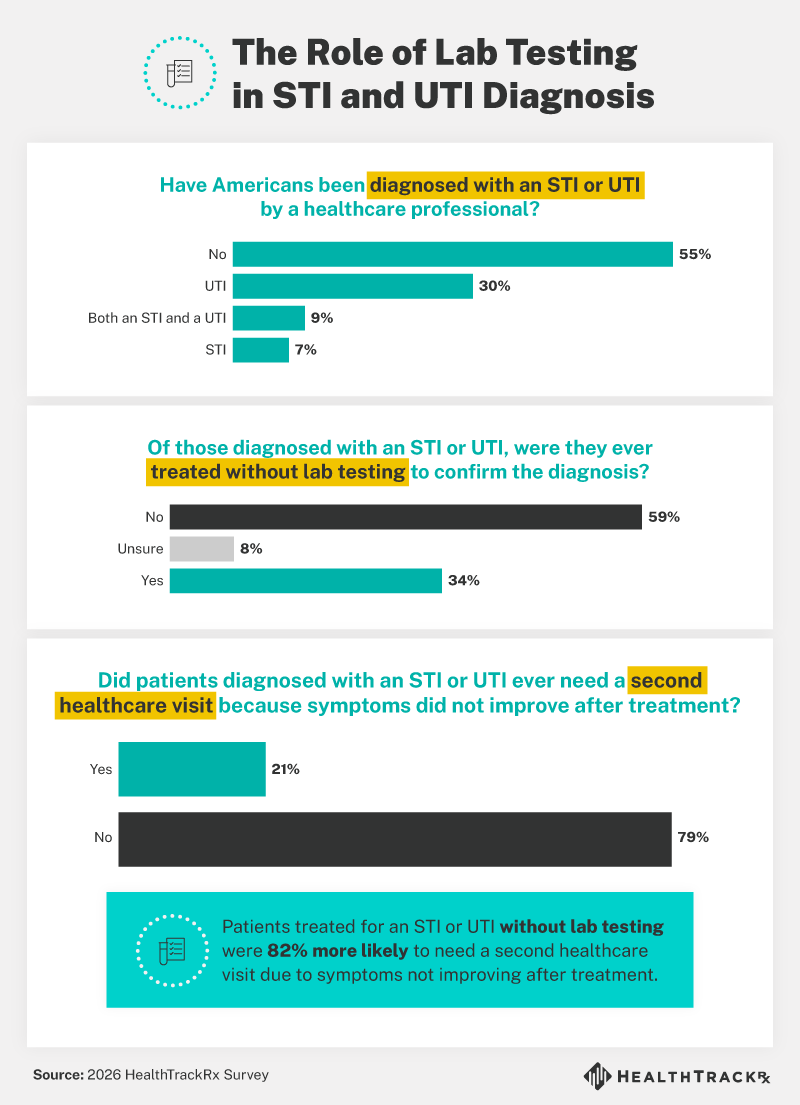
Diagnosis and treatment experiences are common, particularly for women. Among women, 58% say they have been diagnosed with a UTI and 18% with an STI, while 37% report never being diagnosed with either. The findings also suggest that how diagnoses are confirmed can affect outcomes. Among those treated for an STI or UTI without lab testing, 31% required a second healthcare visit because symptoms did not improve, compared to 17% of those whose treatment was confirmed with lab testing.
How Diagnostic Testing Improves Outcomes and Reduces Repeat Visits
“What stands out in these data is the clear impact of diagnostic confirmation on outcomes. When treatment is guided by lab-based testing, patients are more likely to receive the right therapy the first time. In contrast, empiric treatment without testing increases the likelihood of persistent symptoms and repeat visits—thereby driving unnecessary utilization and costs. Timely, accurate diagnostics are not just clinically appropriate—they are essential to improving efficiency across the healthcare system.” — Dr. Steven Goldberg, MD, MBA, Chief Medical Officer, HealthTrack
Why Timely and Accurate Testing Matters
The findings highlight how symptom awareness, privacy concerns, and access to care can all influence whether people pursue STI and UTI testing. Delays in testing when symptoms appear mild, combined with uncertainty about how infections present, may make it more difficult to identify and treat infections quickly. At the same time, the results suggest that how diagnoses are confirmed can shape outcomes, with those treated without lab testing more likely to require additional care when symptoms do not improve. Together, these patterns underscore the importance of accessible, timely testing and accurate diagnosis in helping people make informed decisions.
Methodology
HealthTrack surveyed 1,021 Americans about their experiences with STIs and UTIs. Of respondents, 54% were women, 44% were men, and 2% were non-binary. By generation, 17% were Gen Z, 56% were millennials, 21% were Gen X, and 6% were baby boomers. Additionally, 85% reported having health insurance, while 15% do not. Percentages may not total 100 due to rounding.
About HealthTrack
HealthTrack is a national leader in rapid molecular diagnostics, providing fast and accurate testing solutions that help clinicians deliver timely, informed, and responsible patient care.
Fair Use Statement
This content is available for sharing for non-commercial purposes only. If you wish to use these findings, please ensure to provide proper attribution by linking back to this page.
Related Articles and White papers



HealthTrackRx • Published: April 13, 2026 • Last Reviewed: April, 2026
How Do Americans Recognize and Respond to STI and UTI Symptoms?
Sexually transmitted infections (STIs) and urinary tract infections (UTIs) are common health concerns, yet the way people recognize symptoms, seek care, and receive treatment can vary widely. To better understand these experiences, HealthTrack surveyed Americans about their knowledge of symptoms, testing behaviors, sources of sexual health information, and experiences with diagnosis and treatment.
Key Takeaways
- 1 in 10 Americans are unaware that STIs can occur without noticeable symptoms.
- 22% of Americans who have had an STI have avoided or delayed STI care due to concerns about privacy, judgment or embarrassment.
- 71% say faster, next-morning results would make them more likely to get tested for an STI.
- Patients treated for an STI or UTI without lab testing were 82% more likely to need a second healthcare visit due to symptoms not improving after treatment.
Misunderstandings About STI Symptoms Can Affect When People Seek Care
Recognizing symptoms is often the first step in deciding whether to seek STI testing. Misunderstandings about how STIs present can influence how people interpret symptoms and when they decide to pursue testing.
Delays in testing are relatively common when STI or UTI symptoms feel mild or unclear. Overall, 39% say they postponed testing for this reason, rising to 45% among Gen Z respondents. These patterns may reflect a combination of factors, including uncertainty about how STI symptoms present and hesitation to seek care for sensitive health concerns. Delays are also more common among those without health insurance, with 22% saying they wait to see if symptoms resolve on their own rather than seeking care.
Why Symptom Awareness and Early Testing Matter
“From both a clinical and population health perspective, one of the most important findings is that a meaningful portion of individuals don’t recognize that STIs can be asymptomatic. That gap in awareness—combined with hesitation around privacy and stigma—creates a delay in testing that allows infections to persist, spread, and ultimately require more complex care. Early, informed decision-making is critical to both individual outcomes and broader public health.” — Dr. Steven Goldberg, MD, MBA, Chief Medical Officer, HealthTrack
How People Seek Information and Care for Sexual Health Concerns
When sexual health concerns arise, people may turn to a range of sources for information and care. The survey explored where individuals first look for guidance, how comfortable they feel discussing sexual health with providers, and what factors influence where they choose to get tested.
Where people seek care for sexual health concerns can vary depending on comfort and access to different providers. For example, 33% of women say they go to their OB-GYN for STI or UTI testing. Privacy concerns can also influence whether people pursue care. Among Gen Z respondents who have had an STI, 30% say they avoided or delayed care due to concerns about privacy, judgment, or embarrassment.
Information Sources and Comfort With Care Can Shape Testing Decisions
When sexual health concerns arise, people may turn to a variety of sources for information and guidance. The survey explored where individuals first look for answers, how comfortable they feel discussing sexual health with providers, and where they choose to seek testing.
Diagnosis and treatment experiences are common, particularly for women. Among women, 58% say they have been diagnosed with a UTI and 18% with an STI, while 37% report never being diagnosed with either. The findings also suggest that how diagnoses are confirmed can affect outcomes. Among those treated for an STI or UTI without lab testing, 31% required a second healthcare visit because symptoms did not improve, compared to 17% of those whose treatment was confirmed with lab testing.
How Diagnostic Testing Improves Outcomes and Reduces Repeat Visits
“What stands out in these data is the clear impact of diagnostic confirmation on outcomes. When treatment is guided by lab-based testing, patients are more likely to receive the right therapy the first time. In contrast, empiric treatment without testing increases the likelihood of persistent symptoms and repeat visits—thereby driving unnecessary utilization and costs. Timely, accurate diagnostics are not just clinically appropriate—they are essential to improving efficiency across the healthcare system.” — Dr. Steven Goldberg, MD, MBA, Chief Medical Officer, HealthTrack
Why Timely and Accurate Testing Matters
The findings highlight how symptom awareness, privacy concerns, and access to care can all influence whether people pursue STI and UTI testing. Delays in testing when symptoms appear mild, combined with uncertainty about how infections present, may make it more difficult to identify and treat infections quickly. At the same time, the results suggest that how diagnoses are confirmed can shape outcomes, with those treated without lab testing more likely to require additional care when symptoms do not improve. Together, these patterns underscore the importance of accessible, timely testing and accurate diagnosis in helping people make informed decisions.
Methodology
HealthTrack surveyed 1,021 Americans about their experiences with STIs and UTIs. Of respondents, 54% were women, 44% were men, and 2% were non-binary. By generation, 17% were Gen Z, 56% were millennials, 21% were Gen X, and 6% were baby boomers. Additionally, 85% reported having health insurance, while 15% do not. Percentages may not total 100 due to rounding.
About HealthTrack
HealthTrack is a national leader in rapid molecular diagnostics, providing fast and accurate testing solutions that help clinicians deliver timely, informed, and responsible patient care.
Fair Use Statement
This content is available for sharing for non-commercial purposes only. If you wish to use these findings, please ensure to provide proper attribution by linking back to this page.