Respiratory Trend Report

Week ending March 8th, 2026

HealthTrackRx
Trend Update

Respiratory virus activity remains elevated nationally, with several pathogens continuing to circulate at moderate to high levels. Over the past two weeks, overall activity has remained largely stable, with early signs that respiratory season may begin a gradual decline.

Respiratory Trend Report

Week ending March 8th, 2026

Get Updates

HealthTrackRx
Trend Update

Respiratory virus activity remains elevated nationally, with several pathogens continuing to circulate at moderate to high levels. Over the past two weeks, overall activity has remained largely stable, with early signs that respiratory season may begin a gradual decline.

Infection Trends

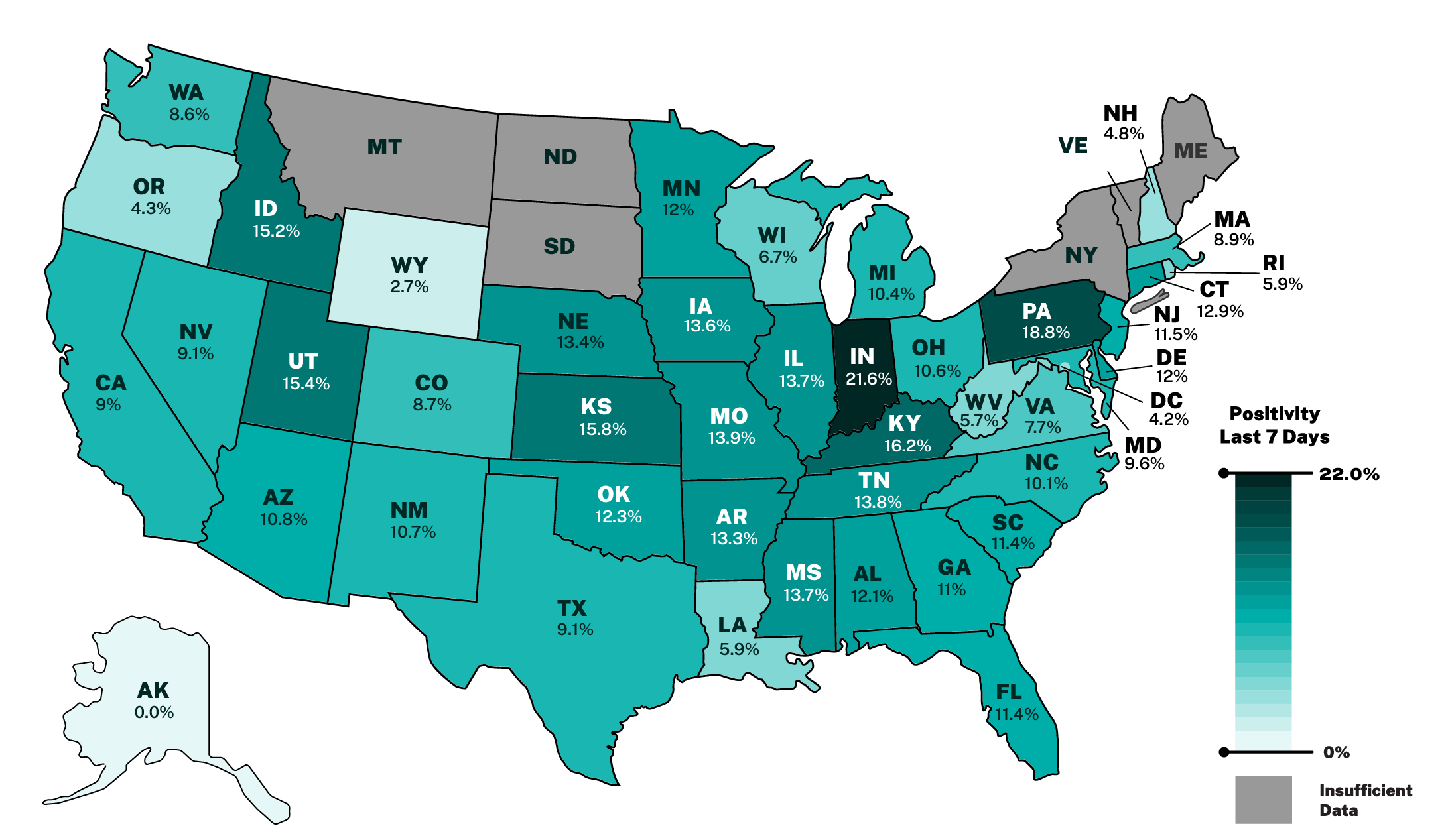
  • Influenza A/B positivity at the cusp of a downward trend, stabilized over the past two weeks at 11.1%.

  • Respiratory Syncytial Virus (RSV) positivity remains elevated at 6.4% with stable to slightly decreasing levels in recent weeks.

  • Seasonal Coronaviruses (229E, NL63, HKU1, and OC43) remain elevated at 11.2%; however, activity appears to begin a gradual downward trend.

  • Rhinovirus/Enterovirus continues to be the most frequently detected pathogen at 15.7%, with stable to slightly increasing positivity in recent weeks.

  • Human Metapneumovirus (hMPV) continues to trend upward, increasing to 5.2%, representing the most notable growth among circulating pathogens.

  • Adenovirus, Parainfluenza Viruses (Types 1–4), COVID-19 (SARS-CoV-2), Enterovirus D68 all remain stable at levels below 2%.

Infection Trends

  • Influenza A/B positivity at the cusp of a downward trend, stabilized over the past two weeks at 11.1%.

  • Respiratory Syncytial Virus (RSV) positivity remains elevated at 6.4% with stable to slightly decreasing levels in recent weeks.

  • Seasonal Coronaviruses (229E, NL63, HKU1, and OC43) remain elevated at 11.2%; however, activity appears to begin a gradual downward trend.

  • Rhinovirus/Enterovirus continues to be the most frequently detected pathogen at 15.7%, with stable to slightly increasing positivity in recent weeks.

  • Human Metapneumovirus (hMPV) continues to trend upward, increasing to 5.2%, representing the most notable growth among circulating pathogens.

  • Adenovirus, Parainfluenza Viruses (Types 1–4), COVID-19 (SARS-CoV-2), Enterovirus D68 all remain stable at levels below 2%.

Seasonal Outlook

  • Influenza A/B, RSV, & Seasonal coronaviruses are expected to gradually decline through March.

  • Human metapneumovirus is expected to continue increasing into early spring.

  • Rhinovirus/Enterovirus will likely persist at baseline levels with potential spring increases.

Seasonal Outlook

  • Influenza A/B, RSV, & Seasonal coronaviruses are expected to gradually decline through March.

  • Human metapneumovirus is expected to continue increasing into early spring.

  • Rhinovirus/Enterovirus will likely persist at baseline levels with potential spring increases.

Trending Up

  • Human Metapneumovirus

Trending Down

  • Influenza A/B
  • Seasonal Coronavirus (229E, NL63, OC43, HKU1)

Remaining Level

  • Respiratory Syncytial Virus (RSV)
  • Rhinovirus/Enterovirus

  • COVID-19 Coronavirus (SARS-CoV-2)

  • Adenovirus

  • Parainfluenza Virus (Types 1–4)
  • Enterovirus D68

Trending Up

  • Human Metapneumovirus

Trending Down

  • Influenza A/B
  • Seasonal Coronavirus (229E, NL63, OC43, HKU1)

Remaining Level

  • Respiratory Syncytial Virus (RSV)
  • Rhinovirus/Enterovirus

  • COVID-19 Coronavirus (SARS-CoV-2)

  • Adenovirus

  • Parainfluenza Virus (Types 1–4)
  • Enterovirus D68

7 Day Influenza Virus A/B Map

This report reflects observed trends in HealthTrackRx testing positivity data, does not convey medical advice, and is provided for informational purposes only. Individuals experiencing respiratory symptoms should consult with their healthcare provider.

Download Respiratory Trend Reports [PDF]

HealthTrackRx Respiratory Resource Library

A collection of whitepapers, articles and webinars from our scientists.