
IS IT A COLD, THE FLU, OR SOMETHING ELSE?
Know for sure by tomorrow.
Not feeling well? Learn about common illnesses during respiratory season, what to do next and when to get tested.
Contact Us
Team up with us to easily add Respiratory Testing to your services. Call us at 866-287-3218 or fill out the form below.
IS IT A COLD, THE FLU, OR SOMETHING ELSE?
Not feeling well? Learn about common illnesses during respiratory season, what to do next and when to get tested.
Contact Us
What You Need to Know About Cold & Flu Season
Stay informed and stay healthy this year.
“Cold and flu season” typically runs from October through May, peaking between December and February, according to the CDC. Respiratory illnesses, like the flu, bronchitis, common cold, COVID-19, pneumonia, and RSV, tend to rise during this time. This happens because viruses in particular spread more easily in cold, dry air. Depending on where you live, timing can vary.
To protect yourself, get your annual vaccines, avoid close contact with people who are sick, and wash your hands often. While it might seem helpful to ask your provider for antibiotics when you are ill, they aren’t always the right answer.
What You Need to Know About Cold & Flu Season
Stay informed and stay healthy this year.
“Cold and flu season” typically runs from October through May, peaking between December and February, according to the CDC. Respiratory illnesses, like the flu, bronchitis, common cold, COVID-19, pneumonia, and RSV, tend to rise during this time. This happens because viruses in particular spread more easily in cold, dry air. Depending on where you live, timing can vary.
To protect yourself, get your annual vaccines, avoid close contact with people who are sick, and wash your hands often. While it might seem helpful to ask your provider for antibiotics when you are ill, they aren’t always the right answer.
Respiratory Infection Symptoms:
How They Compare
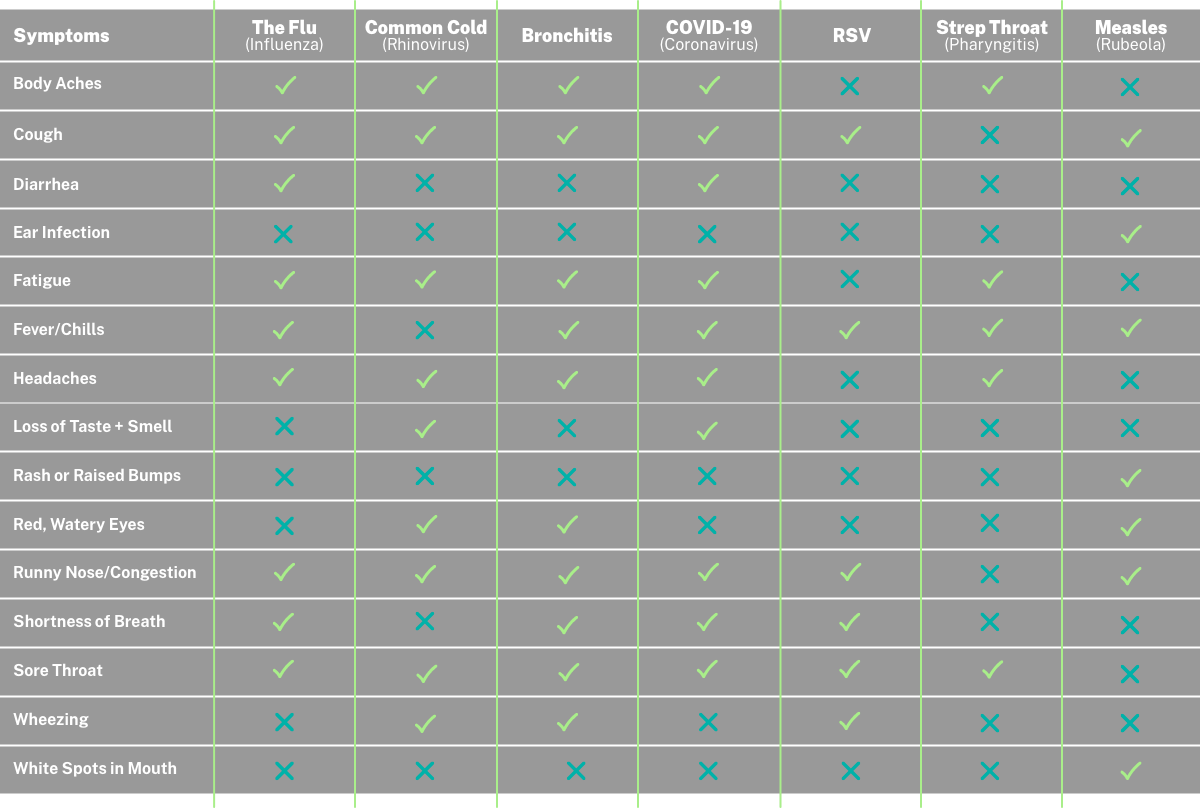
When you start feeling sick, it can be hard to tell what’s causing it. Use the chart below to see how respiratory symptoms with various illnesses compare.
 Common Symptoms
 Uncommon Symptoms
Respiratory Infection Symptoms:
How They Compare
When you start feeling sick, it can be hard to tell what’s causing it. Use the chart below to see how respiratory symptoms with various illnesses compare.
Common Symptoms:
- Body Aches
- Cough
- Diarrhea
- Fatigue
- Fever/Chills
- Headaches
- Runny Nose/Congestion
- Shortness of Breath
- Sore Throat
Uncommon Symptoms:
- Ear Infection
- Loss of Taste + Smell
- Rash or Raised Bumps
- Red, Watery Eyes
- Wheezing
- White Spots in Mouth
Common Symptoms:
- Body Aches
- Cough
- Fatigue
- Headaches
- Loss of Taste + Smell
- Red, Watery Eyes
- Runny Nose/Congestion
- Sore Throat
- Wheezing
Uncommon Symptoms:
- Diarrhea
- Ear Infection
- Fever/Chills
- Rash or Raised Bumps
- Shortness of Breath
- White Spots in Mouth
Common Symptoms:
- Body Aches
- Cough
- Fatigue
- Fever/Chills
- Headaches
- Red, Watery Eyes
- Runny Nose/Congestion
- Shortness of Breath
- Sore Throat
- Wheezing
Uncommon Symptoms:
- Diarrhea
- Ear Infection
- Loss of Taste + Smell
- Rash or Raised Bumps
- White Spots in Mouth
Common Symptoms:
- Body Aches
- Cough
- Diarrhea
- Fatigue
- Fever/Chills
- Headaches
- Loss of Taste + Smell
- Runny Nose/Congestion
- Shortness of Breath
- Sore Throat
Uncommon Symptoms:
- Ear Infection
- Rash or Raised Bumps
- Red, Watery Eyes
- Wheezing
- White Spots in Mouth
Common Symptoms:
- Cough
- Fever/Chills
- Runny Nose/Congestion
- Shortness of Breath
- Sore Throat
- Wheezing
Uncommon Symptoms:
- Body Aches
- Diarrhea
- Ear Infection
- Fatigue
- Headaches
- Loss of Taste + Smell
- Rash or Raised Bumps
- Red, Watery Eyes
- White Spots in Mouth
Common Symptoms:
- Body Aches
- Fatigue
- Fever/Chills
- Headaches
- Sore Throat
Uncommon Symptoms:
- Cough
- Diarrhea
- Ear Infection
- Loss of Taste + Smell
- Rash or Raised Bumps
- Red, Watery Eyes
- Runny Nose/Congestion
- Shortness of Breath
- Wheezing
- White Spots in Mouth
Common Symptoms:
- Cough
- Ear Infection
- Fever/Chills
- Rash or Raised Bumps
- Red, Watery Eyes
- Runny Nose/Congestion
- White Spots in Mouth
Uncommon Symptoms:
- Body Aches
- Diarrhea
- Fatigue
- Headaches
- Loss of Taste + Smell
- Shortness of Breath
- Sore Throat
- Wheezing
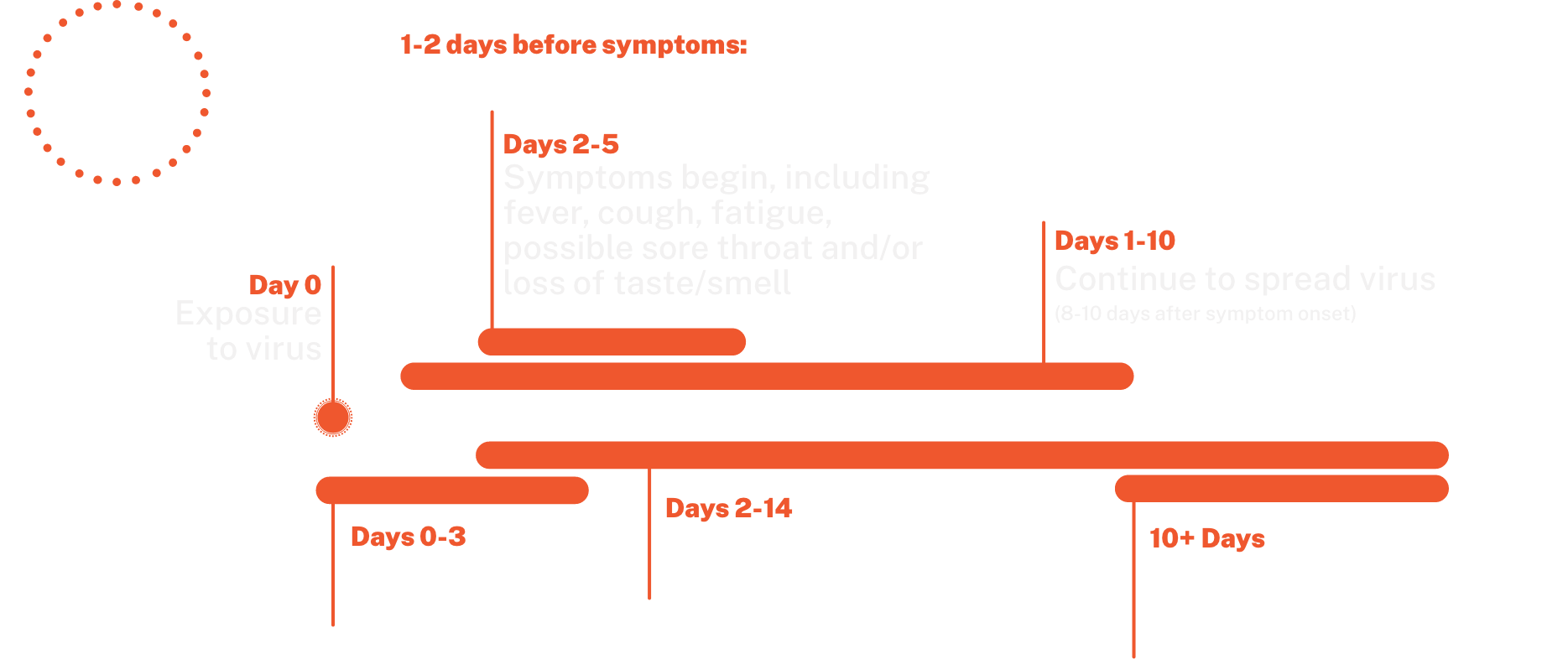
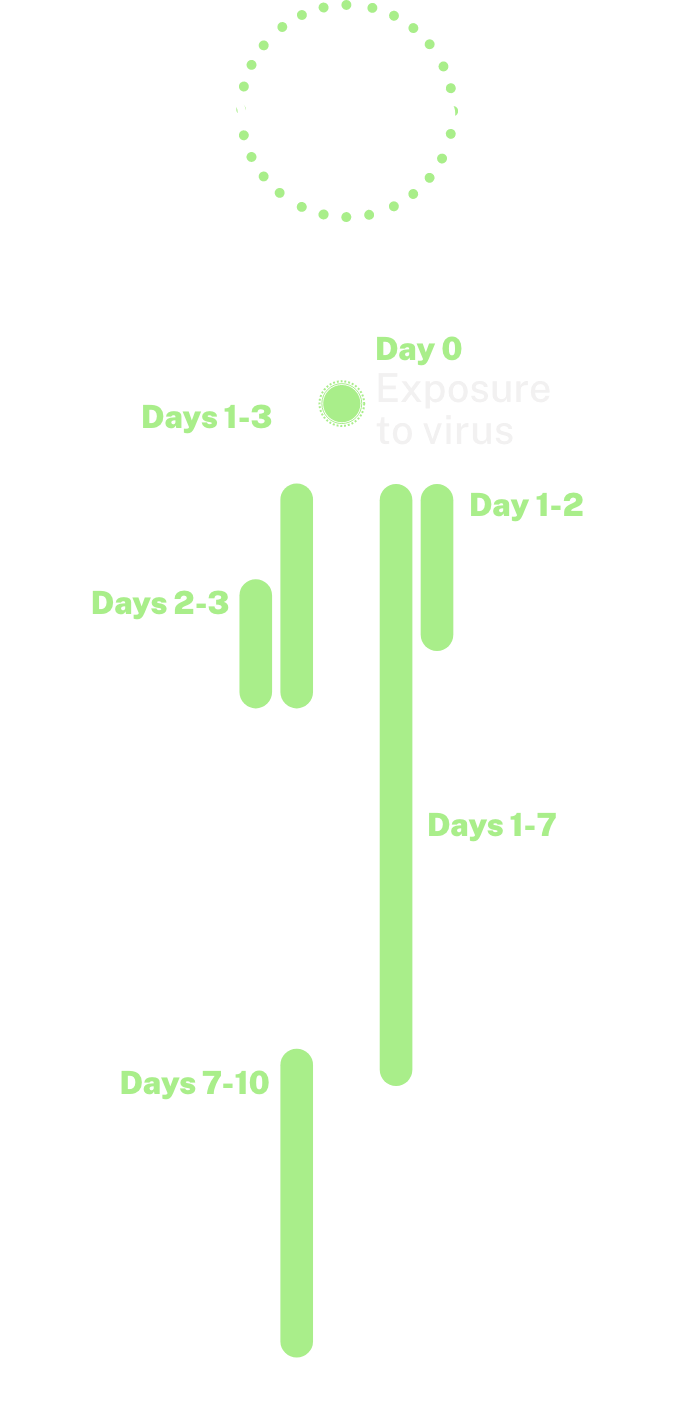
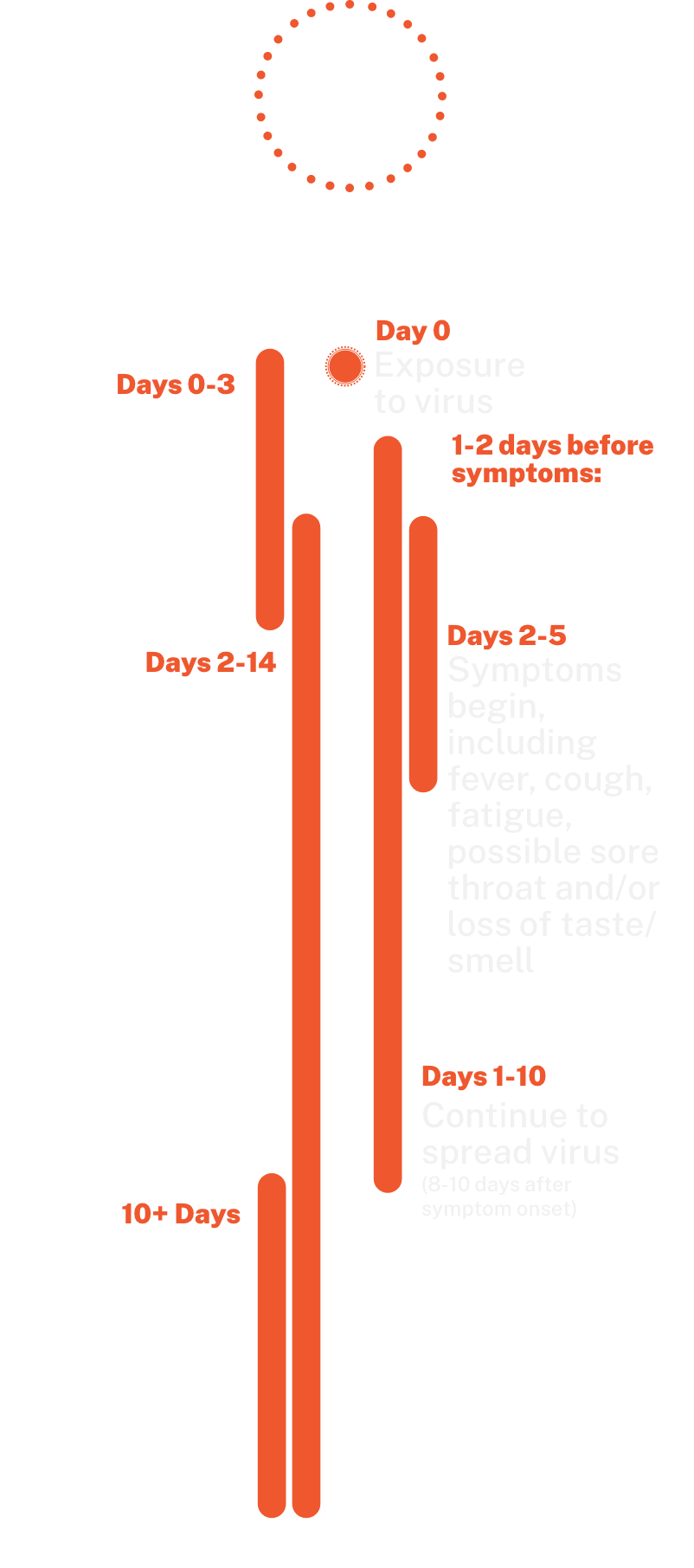
You can spread all three viruses before you know you’re sick. Early testing helps protect your family and community.


You can spread all three viruses before you know you’re sick. Early testing helps protect your family and community.

What To Do When You’re Feeling Sick
When you’re sick, taking care of yourself helps you recover faster and protects those around you. Start with the basics: get plenty of rest, stay hydrated, and eat nourishing foods when you have an appetite. To prevent spreading germs, cover coughs and sneezes with your elbow, wash your hands frequently, consider wearing a mask around others, and stay home when possible.
Most illnesses improve with self-care, but seek medical attention if you experience worsening symptoms, difficulty breathing, a high fever that won’t break, severe pain, or symptoms that persist beyond what’s typical. Your doctor may use “rapid” point-of-care (POC) testing and/or PCR testing to get to the bottom of your illness, depending on your symptoms. PCR is the way to know for sure.
What To Do When You’re Feeling Sick
When you’re sick, taking care of yourself helps you recover faster and protects those around you. Start with the basics: get plenty of rest, stay hydrated, and eat nourishing foods when you have an appetite. To prevent spreading germs, cover coughs and sneezes with your elbow, wash your hands frequently, consider wearing a mask around others, and stay home when possible.
Most illnesses improve with self-care, but seek medical attention if you experience worsening symptoms, difficulty breathing, a high fever that won’t break, severe pain, or symptoms that persist beyond what’s typical. Your doctor may use “rapid” point-of-care (POC) testing and/or PCR testing to get to the bottom of your illness, depending on your symptoms. PCR is the way to know for sure.
Prevention Is the Best Medicine
The best defense against respiratory illnesses is preventing them from ever happening. But if you do become ill, always remember: If you develop symptoms and have risk factors for severe illness, seek healthcare promptly for testing and treatment.
Tips for staying healthy this cold and flu season:


Prevention Is the Best Medicine
The best defense against respiratory illnesses is preventing them from ever happening. But if you do become ill, always remember: If you develop symptoms and have risk factors for severe illness, seek healthcare promptly for testing and treatment.
Tips for staying healthy this cold and flu season:
STI Testing:
Protecting Your Sexual Health
About HealthTrackRx
HealthTrackRx PCR testing has the power to change how healthcare works.